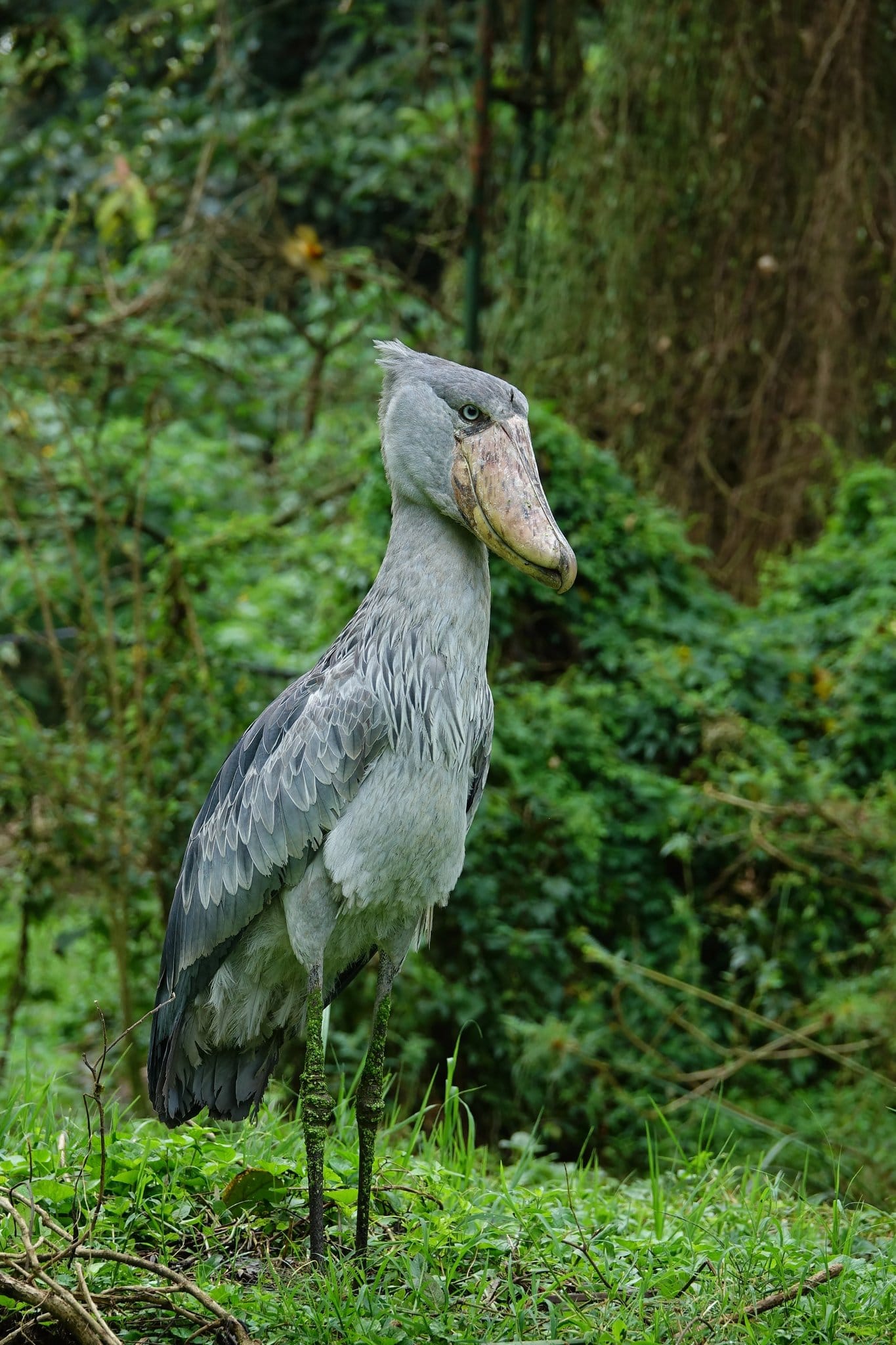
Mabamba Wetlands
The most reliable place on Earth to see the shoebill stork.
1.5 hour drive and boat from Entebbe
December to March, breeding season
Shoebill stork, wetland birding, dawn canoe safari
Central Uganda
About this Destination
The shoebill is one of the world's most prehistoric birds. It is large, solitary, and motionless for stretches that feel deliberately theatrical, standing absolutely still in the shallows of papyrus swamps as if it has not fully committed to the present century. It was known to the ancient Egyptians, who depicted it on tomb walls. The scientific name, Balaeniceps rex, translates as whale-headed king. This is accurate.
The Mabamba wetland on the northern shore of Lake Victoria is where you go to find one. Not hope to find one. Find one. Mabamba is consistently listed alongside the Bangweulu Swamps in Zambia as the world's most reliable shoebill site, but Mabamba is accessible in a morning from Kampala or Entebbe. It requires no multi-day expedition. A dawn departure, a canoe, a knowledgeable local guide, and patience measured in minutes rather than hours.
The wetland itself is a papyrus labyrinth of channels and open water on the shore of Africa's largest lake. The birding extends well beyond the shoebill: African jacana, malachite kingfisher, papyrus gonolek, blue-headed coucal, and dozens of herons and egrets are resident. Morning mist on the water, the sound of frogs giving way to birdsong, a paddle through papyrus in a dugout canoe: even without the shoebill, this is a fine morning.
Key Wildlife
What to Do
Experiences in Mabamba Wetlands
Dawn Canoe Safari
The best time to find shoebill is early morning before the heat builds. Dugout canoes or motor canoes with local guides navigate the papyrus channels and open water of the wetland. Guides know the territories of resident shoebill individuals and position the canoe for clear, unobstructed views. The encounter, when it happens, is typically within 10 to 30 metres.
Shoebill Photography
The shoebill's patience is the photographer's opportunity. The bird stands completely still for minutes at a time, usually in good light at the papyrus edge, giving extended time for careful composition. Guides who work Mabamba regularly know which individuals are most tolerant and position accordingly.
Wetland Birding
Beyond the shoebill, Mabamba's species list includes papyrus gonolek, blue-headed coucal, African jacana, pygmy kingfisher, lesser jacana, and a range of herons, egrets, and waterfowl. A morning in the wetland without finding the shoebill would still produce 40 to 60 species for a competent birder.
Before You Go
Practical information
Mabamba is reached by road to Kasanje landing site on Lake Victoria (approximately 45 minutes from Entebbe) and then a short motor canoe transfer to the wetland entrance. Canoe hire and guide fees are approximately $30 to $50 USD per person depending on group size. The visit takes 2 to 3 hours and works as a half-day excursion from Entebbe or Kampala, making it an excellent addition to an itinerary arrival or departure day.