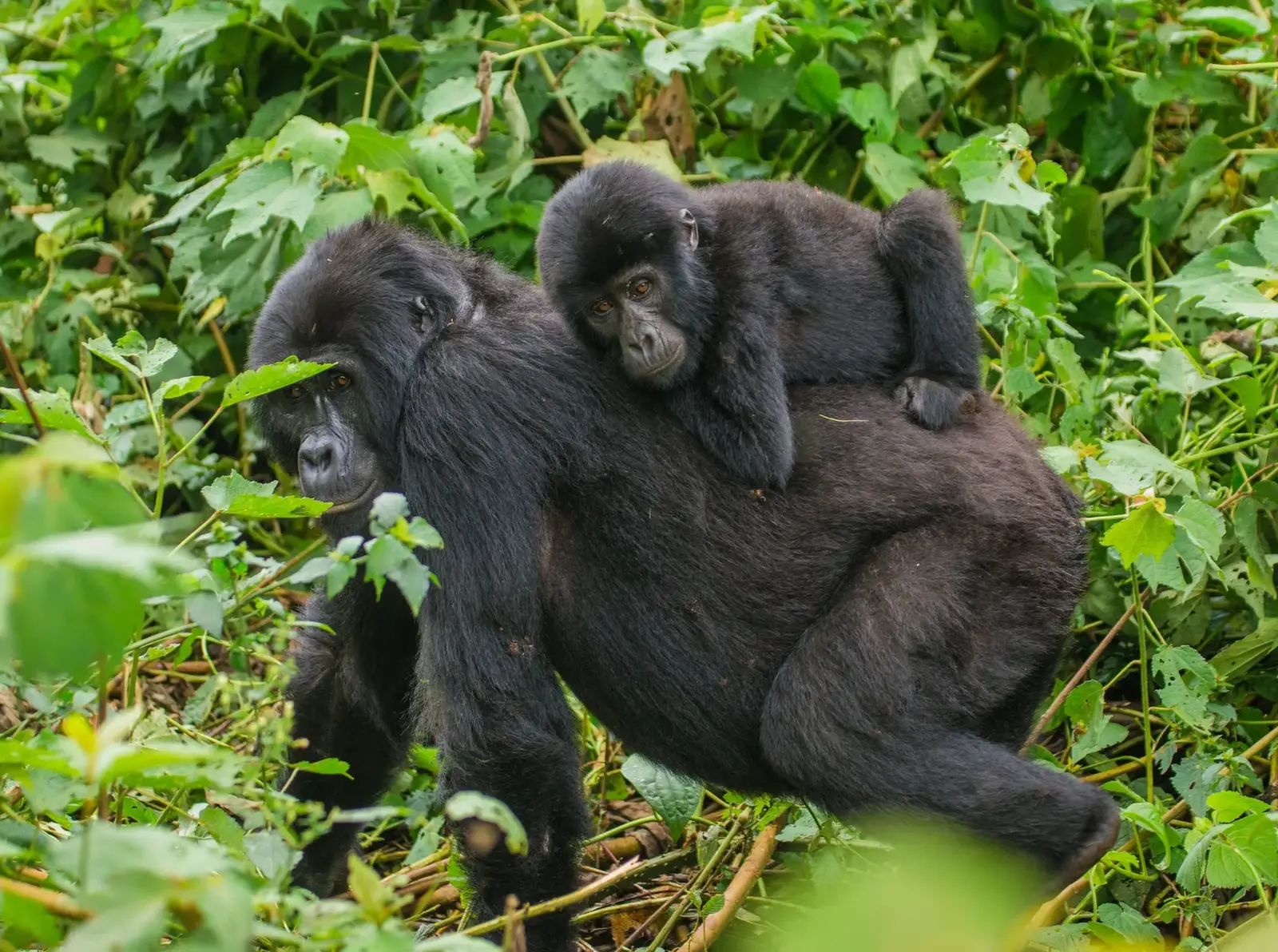
The mountain gorilla is the only great ape whose wild population is increasing. This is not an accident and it is not inevitable. It is the result of a specific conservation philosophy implemented over thirty years, tested against poaching, disease, habitat encroachment and political instability, and proved effective by the census data. Understanding how it works matters, because it is directly replicable, and directly threatened whenever the economics shift.
254
gorillas in 1981
620
gorillas by 1994
1,063
gorillas today
Ledger
conservation tracked, available on request
The numbers
In 1981, the mountain gorilla population across Rwanda, Uganda and the DRC was estimated at 254 individuals. By 1994, despite international conservation attention, it had grown only marginally to an estimated 620, due to ongoing habitat loss and poaching. The 2018 census, the most recent comprehensive count, recorded 1,063 individuals. The population is growing at approximately 3 percent per year. No other great ape population is growing.
The mechanism
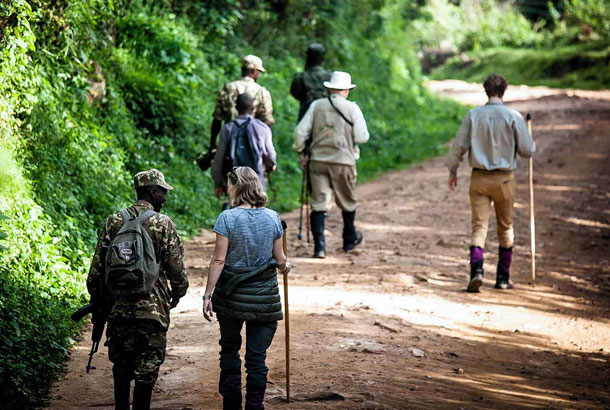
The conservation model that produced this result is known, broadly, as community based conservation with revenue sharing. The framework has four components. Protection, through anti poaching patrols, ranger infrastructure and veterinary teams. Habituation, the multi year programmes that make wild gorilla families accessible to human observers. Tourism revenue generation, through permit fees, lodge taxes and guide income. And community benefit sharing, where a mandatory percentage of all gorilla permit revenue is returned to communities surrounding the park.
The gorilla permit is not a product. It is a conservation instrument. When you buy one, you are funding the patrol that will protect that gorilla family tomorrow morning.
The community dimension
Uganda's wildlife legislation requires that a defined share of park entry fees be returned to local communities for development projects. Schools, health centres, roads, water infrastructure. In Bwindi, the gorilla families most sought by tourists generate the most revenue, and that revenue has materially improved the infrastructure of the communities surrounding the park. A family that once might have poached for bushmeat now has economic incentive to report poachers. This alignment of conservation and community interest is fragile. It depends on tourism income remaining real and consistent. But it is demonstrably working.
The Bwindi House Gorilla Safaris contribution
On top of the statutory revenue sharing built into every permit, a defined portion of every journey is committed to conservation and community support, tracked through the Bwindi House Gorilla Safaris Ledger. The recipients are CTPH, Conservation Through Public Health, founded by Dr Gladys Kalema Zikusoka, working at the intersection of gorilla health and community wellbeing, and local Batwa community programs in the Bwindi region. It is a fixed cost of operating, not a discretionary one, and the allocation is available on request.
What this means for you
Every guest who visits Bwindi and purchases a gorilla permit contributes, tangibly, to the population increase. The mathematics are not complicated. The gorillas exist in increasing numbers because they are worth more alive, to local communities, to the national economy, to the tourism operators who employ guides and porters and lodge staff, than they would be if the forest were converted to agriculture. Your visit is not incidental to that equation. It is the equation.
Written by
Vincent Arihoruhanga
Founder, Bwindi House Gorilla Safaris.