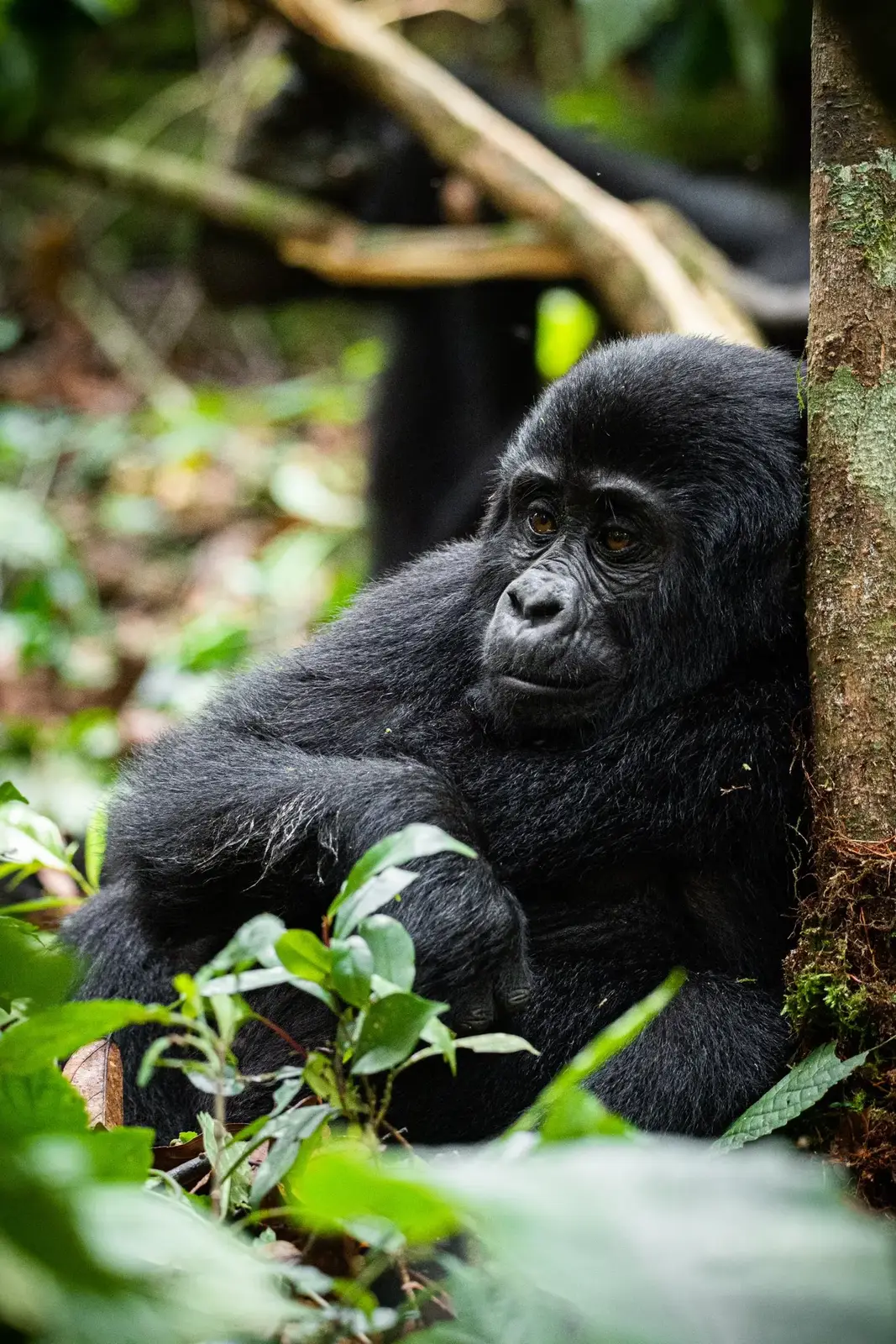
This is one of the questions I respect most, because it is one of the most honest. It is easy to look at a photograph of a gorilla family and want to be there. It is harder to look at yourself honestly and ask: can I actually do the walk to get there. The answer for most people is yes, but it requires knowing what you are actually committing to.
Let me give you the real picture.
What the trek actually involves
A Bwindi gorilla trek begins at one of four sector trailheads at an elevation of between 1,600 and 2,100 metres. The gorilla families live in the forest and move each day. Advance trackers follow from first light and radio in their position. You walk from the trailhead to that position, which may take between forty-five minutes and six hours depending on where the family has settled.
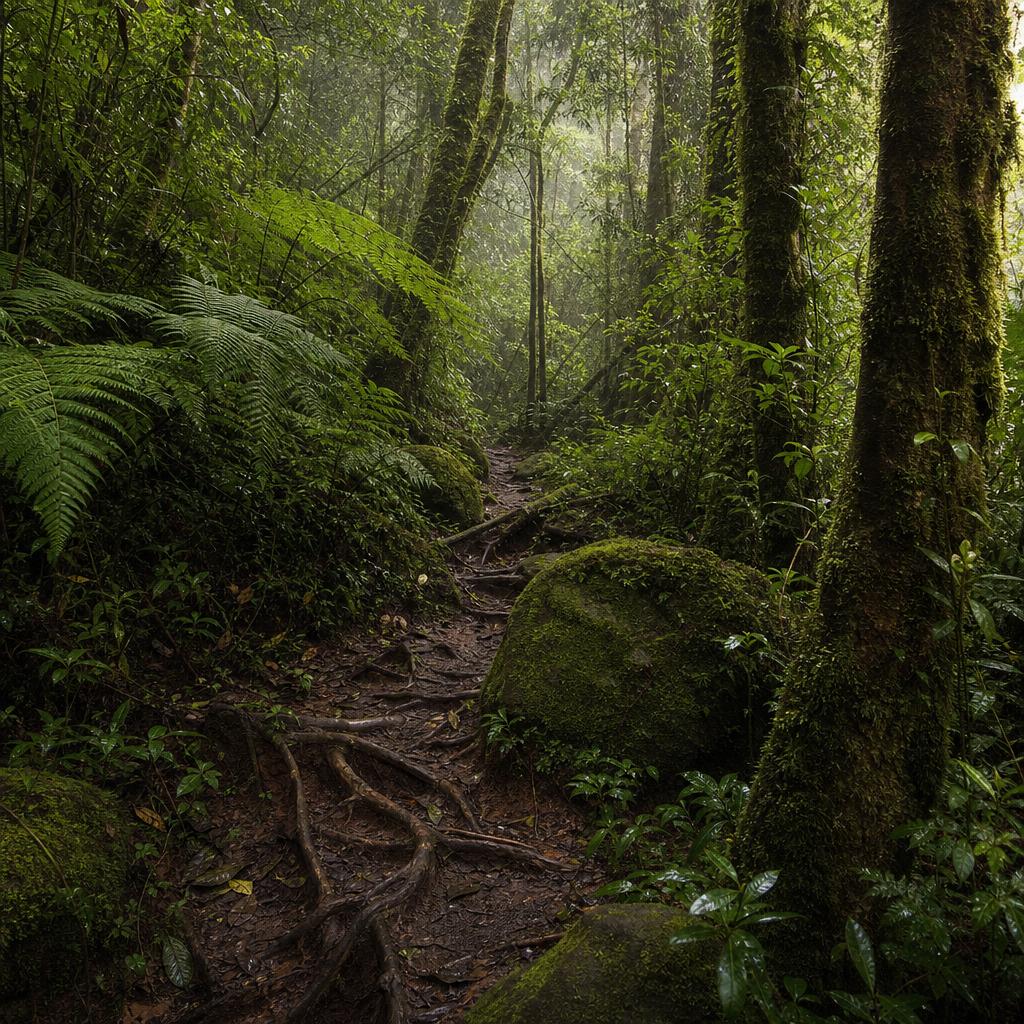
The terrain is genuine highland rainforest. That means steep gradients, slippery roots, sections of dense vegetation, and no flat path of the kind you would train on in a gym. The air is thinner than at sea level. The humidity is high. The path is often muddy after rain, and Bwindi receives rain year-round.
1,600m
trailhead elevation
45min–6hrs
trek to gorillas
15kg
porter load
60 min
with the family
What 'moderate' fitness actually means in this context
Most trek descriptions use words like 'moderate' or 'moderately strenuous'. In my experience, this description causes some confusion, because 'moderate' in a highland rainforest at altitude is a different thing from 'moderate' on a city fitness trail.
What it actually means: you should be able to walk uphill at a sustained pace for ninety minutes to two hours without stopping to recover. Not sprinting, not bounding — sustained, deliberate uphill walking. If you can do that comfortably with a daypack at home, you can do a gorilla trek in Bwindi. If that description sounds like more than you can currently manage, the trek is still achievable with preparation.
Six weeks of preparation
This is the preparation regime I give every guest who books with us and has not trekked regularly in the preceding year:
- Three sessions per week of uphill walking, minimum forty-five minutes each. Gradient matters more than pace — use stairs, a treadmill on incline, or better still, a real hill. Start at your current level and add five minutes per session each week.
- One longer session per week — ninety minutes to two hours — at a moderate sustained pace. This simulates the sustained element of the trek rather than the gradient.
- Wear your actual trekking boots during these sessions. Breaking boots in on pavement is not sufficient. Two of the six weeks should include rough terrain to understand how the boot behaves on uneven ground.
- Carry a loaded daypack during your long sessions by week four. Five to eight kilograms is sufficient. On the trek itself, a porter carries most of this — but the habit of walking with weight builds the right muscle groups.
- Sleep at elevation if you can in the two days before your trek. Kabale town, where most guests stay the night before, sits at 1,869 metres. That one night of altitude acclimatisation is genuinely useful.
The porter question
I want to address this directly because a surprising number of guests feel self-conscious about hiring a porter at the trailhead. Please let go of that feeling entirely. Hiring a porter is not a concession to weakness. It is one of the most sensible things you can do on a trek day, and it is one of the most direct ways to benefit the community that lives alongside the park.
Porters are local community members, trained and organised by UWA. They cost USD 20 for the trek day. They will carry your daypack, steady you on steep descents, and when necessary provide physical support on difficult sections. Every Bwindi House Gorilla Safaris journey includes a porter arrangement as standard, because it is simply the right call. I have never met a guest who regretted it.
Age and health considerations
Uganda Wildlife Authority requires all trekkers to be at least fifteen years old. There is no upper age limit. I have led guests in their mid-seventies who managed the trek without incident, and I have had guests in their fifties who found it more demanding than expected. Age is not the determining variable. Current fitness level and any underlying health conditions are the real factors.
Conditions that warrant a frank conversation before booking:
- Recent knee or hip surgery or significant joint pain on stairs or descents
- Cardiac conditions or history of altitude-related symptoms
- Significant mobility limitations that affect uneven terrain
- Severe asthma or respiratory conditions — the altitude and humidity together can be a trigger
None of these conditions automatically rules out a trek, and UWA does have provisions for guests who need additional support. But they need to be declared in advance so we can plan appropriately and honestly. A surprise on trek day is the one outcome we work hardest to avoid.
The guests who find the trek hardest are almost always those who were not told honestly what it would be. The guests who find it most rewarding are those who prepared specifically for it, not just generally for travel.
The effort is part of it
One of the things I keep returning to in this work is that the difficulty of the approach is inseparable from the quality of the encounter. Guests who have walked hard to reach the family — whose boots are caked in clay, whose lungs are working, who have been through the forest — arrive at that moment with a completely different orientation than guests who arrived easily. The effort is not incidental. It is constitutive of what happens when you finally crouch five metres from a silverback and feel the air between you.
Written by
Vincent Arihoruhanga
Founder, Bwindi House Gorilla Safaris.