Uganda is one of the world's great wildlife anomalies. A landlocked country the size of the United Kingdom contains an extraordinary concentration of flagship species that would, in other parts of Africa, require multiple countries and thousands of kilometres to assemble. Five of these have become, among serious wildlife travellers, the defining measure of a Ugandan journey.
This is the field guide I hand to guests during their first briefing in Entebbe. It is the working list. Treat it that way.
459
mountain gorillas in Bwindi
26
habituated families
208
daily trekking permits
4
Bwindi sectors
1. The Mountain Gorilla
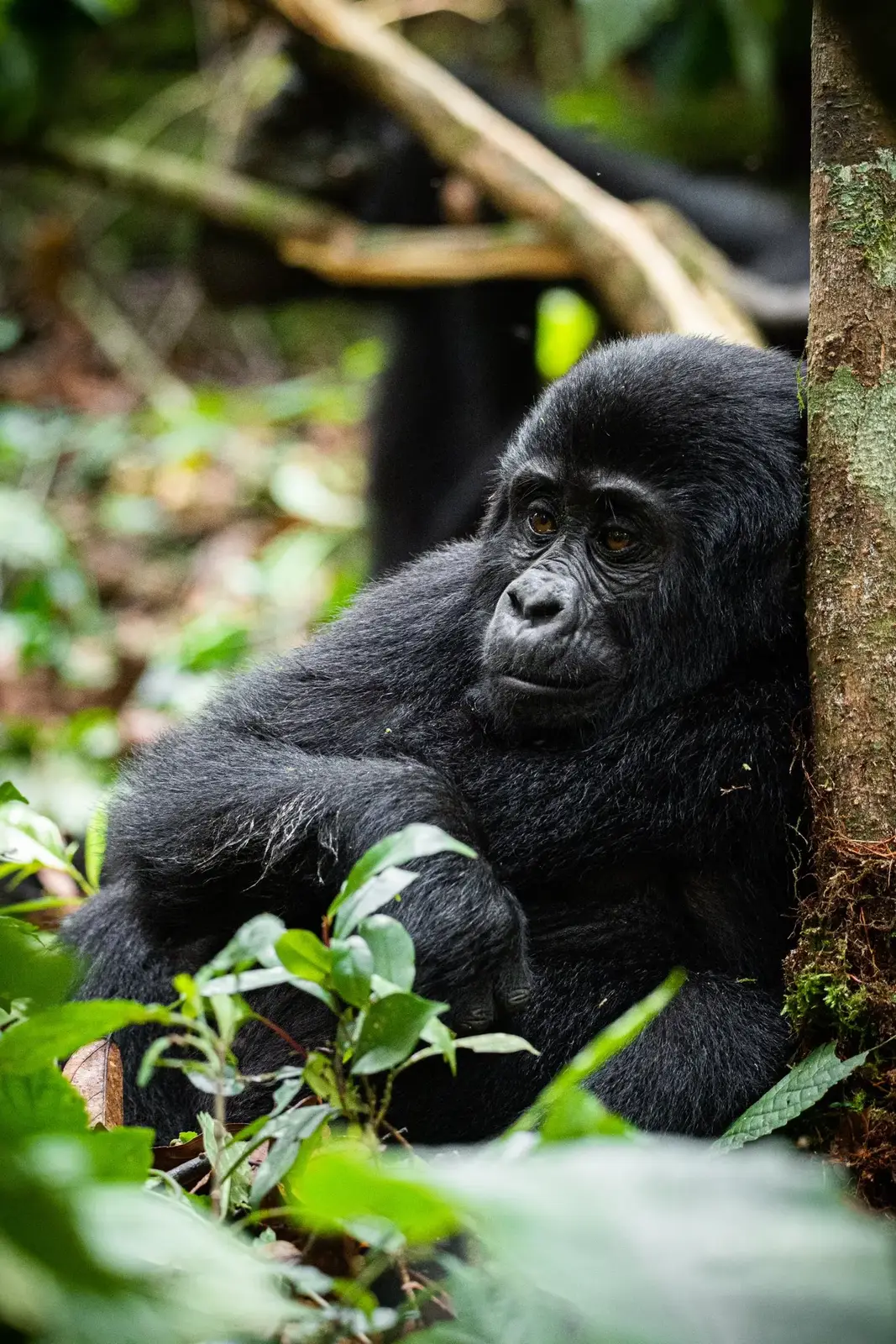
Gorilla beringei beringei. Found in Bwindi Impenetrable National Park and Mgahinga Gorilla National Park. Population approximately 1,063 across the global range, of which roughly 459 live in Uganda across 26 habituated families open to trekking in Bwindi alone.
A mature silverback can exceed 180 kilos. Paradoxically, they are also among the most gentle of the great apes. Their social structure is complex. Hierarchical but not aggressive, intimate but not sentimental. Watching a family group at rest is like watching a very slow, very quiet community. Watching them play is something else entirely.
2. The Shoebill Stork
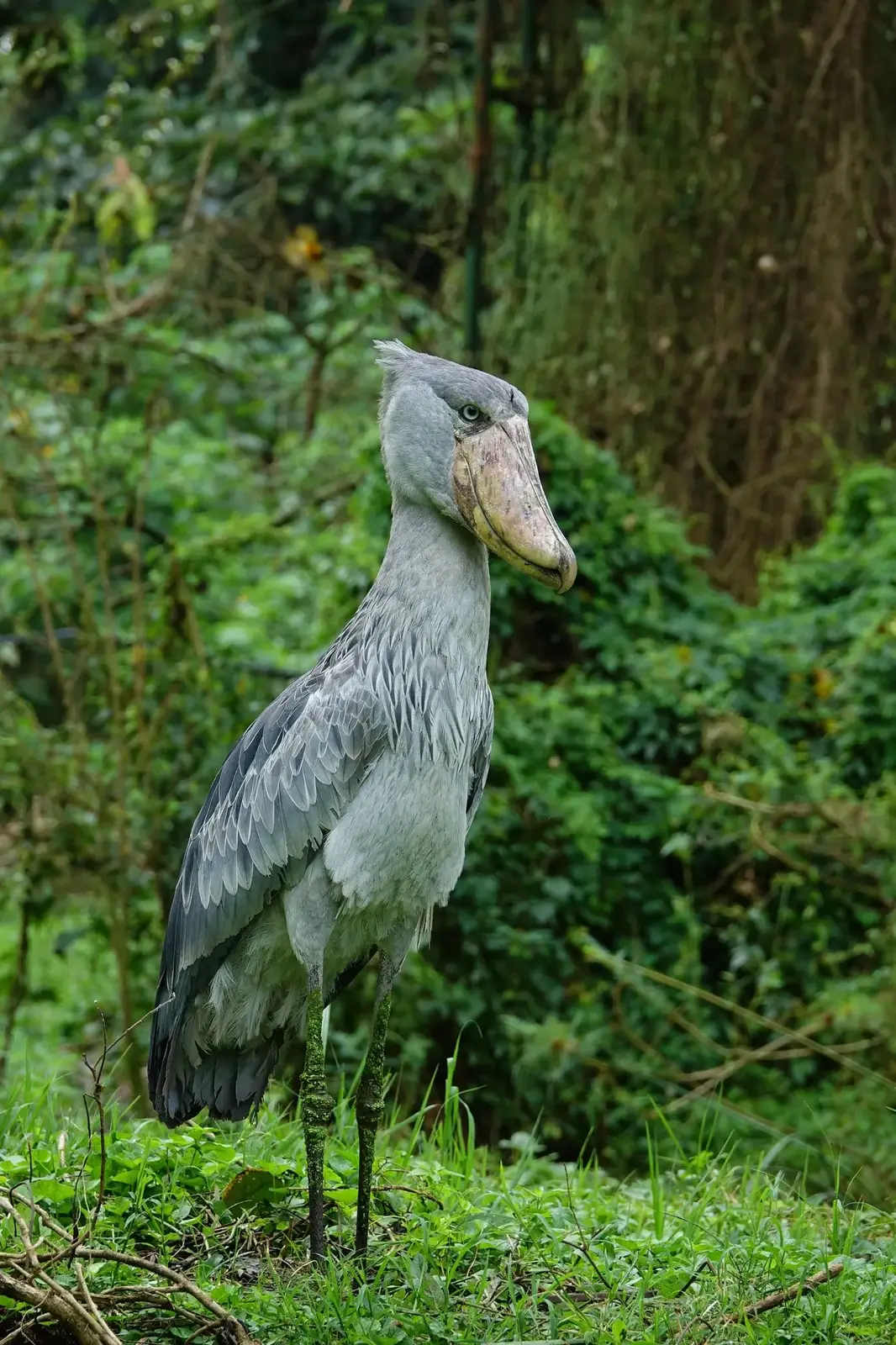
Balaeniceps rex. Found at Mabamba Wetlands a short drive from Entebbe, and in Murchison Falls National Park. Global population estimated between 5,000 and 8,000. The shoebill is not the most charismatic bird in Uganda's 1,000 plus species count. It is the most arrested in evolutionary time, and it looks and behaves as if it arrived from the Cretaceous and never updated. Standing up to 1.5 metres tall, with a bill shaped like a Dutch clog, the shoebill is an apex ambush predator of lungfish. It can remain completely motionless for thirty minutes.
The shoebill does not move when you approach in a canoe. It tracks you with one enormous amber eye, deciding whether you are worthy of its attention. Usually you are not.
3. The Tree Climbing Lion
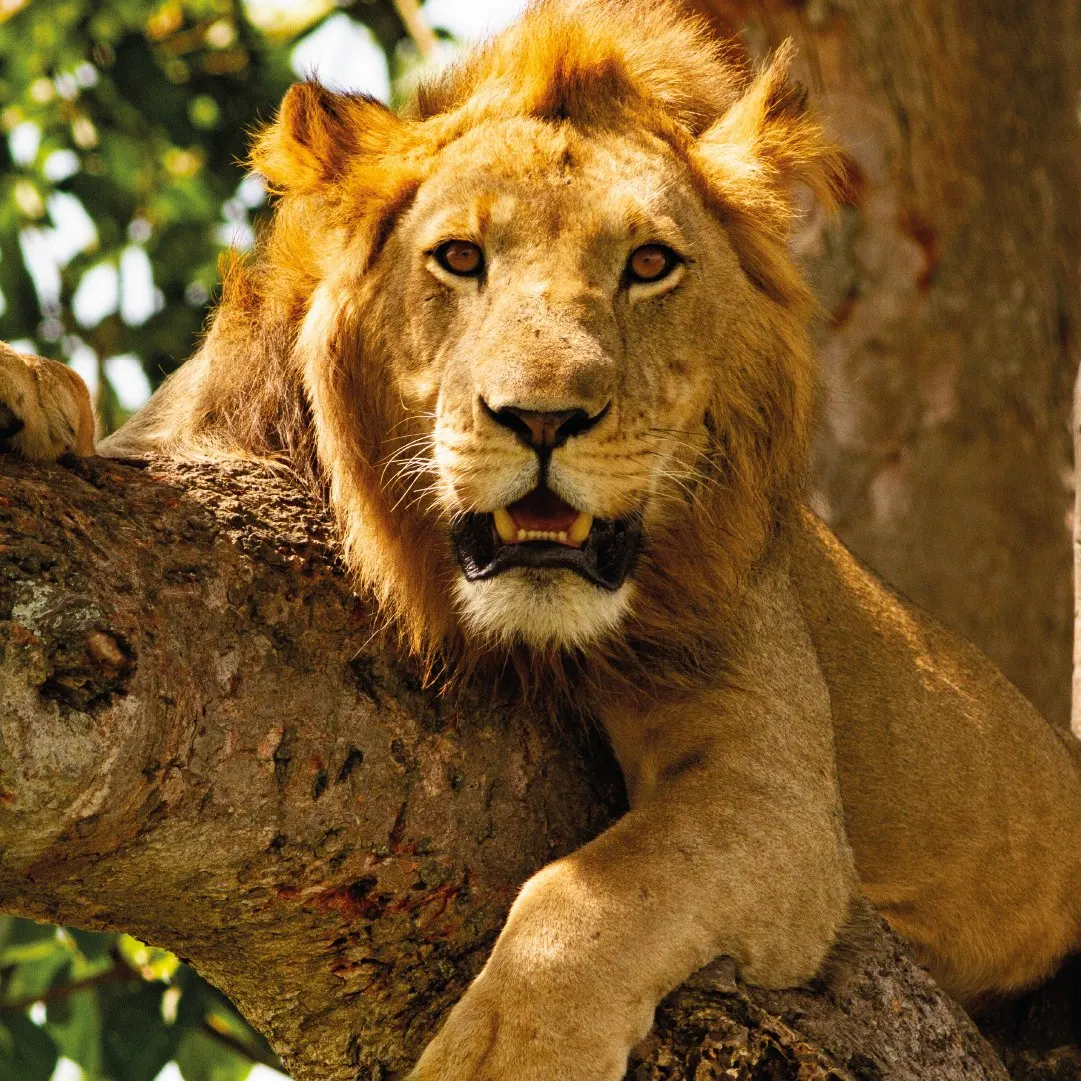
Panthera leo. Found in the Ishasha sector of Queen Elizabeth National Park. The Ishasha pride fluctuates. Current estimates suggest 20 to 30 individuals. Most lions do not climb trees. The lions of Ishasha do, with apparent preference for the horizontal limbs of large fig trees along the Ntungwe River.
Theories abound. Shade from the savannah heat. Escape from ground level insects. Elevated vantage for hunting. Learned tradition passed cub to cub. The honest answer is that nobody knows, and the not knowing is part of the appeal.
4. The White Rhino
Ceratotherium simum simum. Found at Ziwa Rhino Sanctuary near Nakasongola, the only place in Uganda where wild rhinos can be tracked on foot. Ziwa holds approximately 33 southern white rhinos bred from stock reintroduced after the catastrophic poaching of the 1970s and 1980s eliminated rhinos from Uganda entirely.
Walking on foot, with a tracker, to within metres of a wild rhino is to witness conservation succeeding in real time. Ziwa is also a working community model. Local rangers, local guides, and a release plan that aims to return rhinos to Murchison Falls within the decade.
5. The Chimpanzee
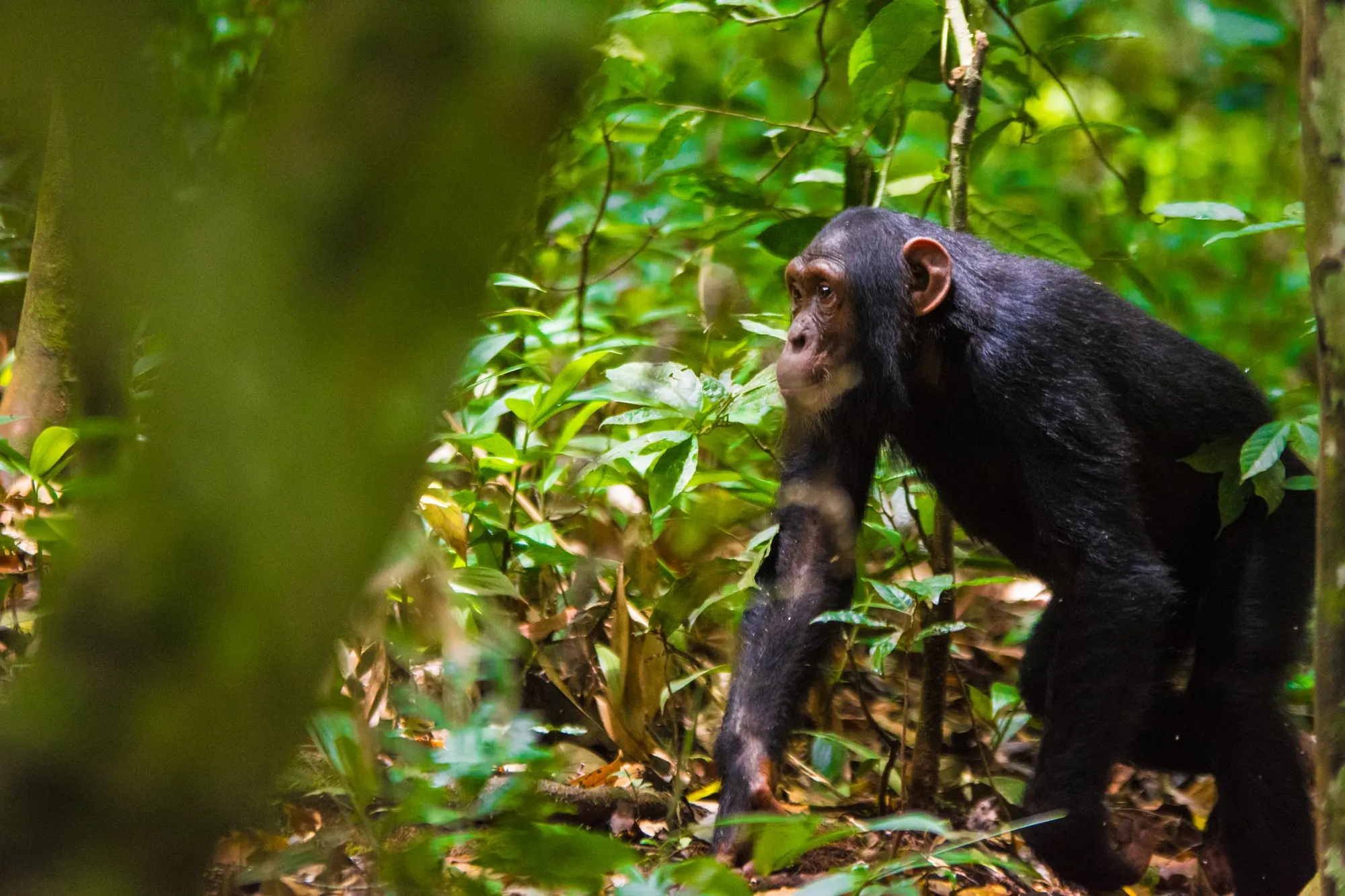
Pan troglodytes schweinfurthii. Found in Kibale National Park (Kanyanchu trailhead), Budongo Forest within Murchison Falls National Park, and Kyambura Gorge in Queen Elizabeth. The chimpanzee is our closest living relative, sharing approximately 98.7 percent of our DNA. They are also the loudest, most theatrical, and most socially complex of the great apes.
Tracking chimpanzees in Kibale's dense forest, listening to the pandemonium of a group moving overhead before you can see them, is a completely different experience from the reverence of a gorilla encounter. Loud, chaotic, and entirely magnificent. Kibale alone supports around 1,500 chimpanzees in 13 primate species, the highest primate density in Africa.
Building a journey around the five
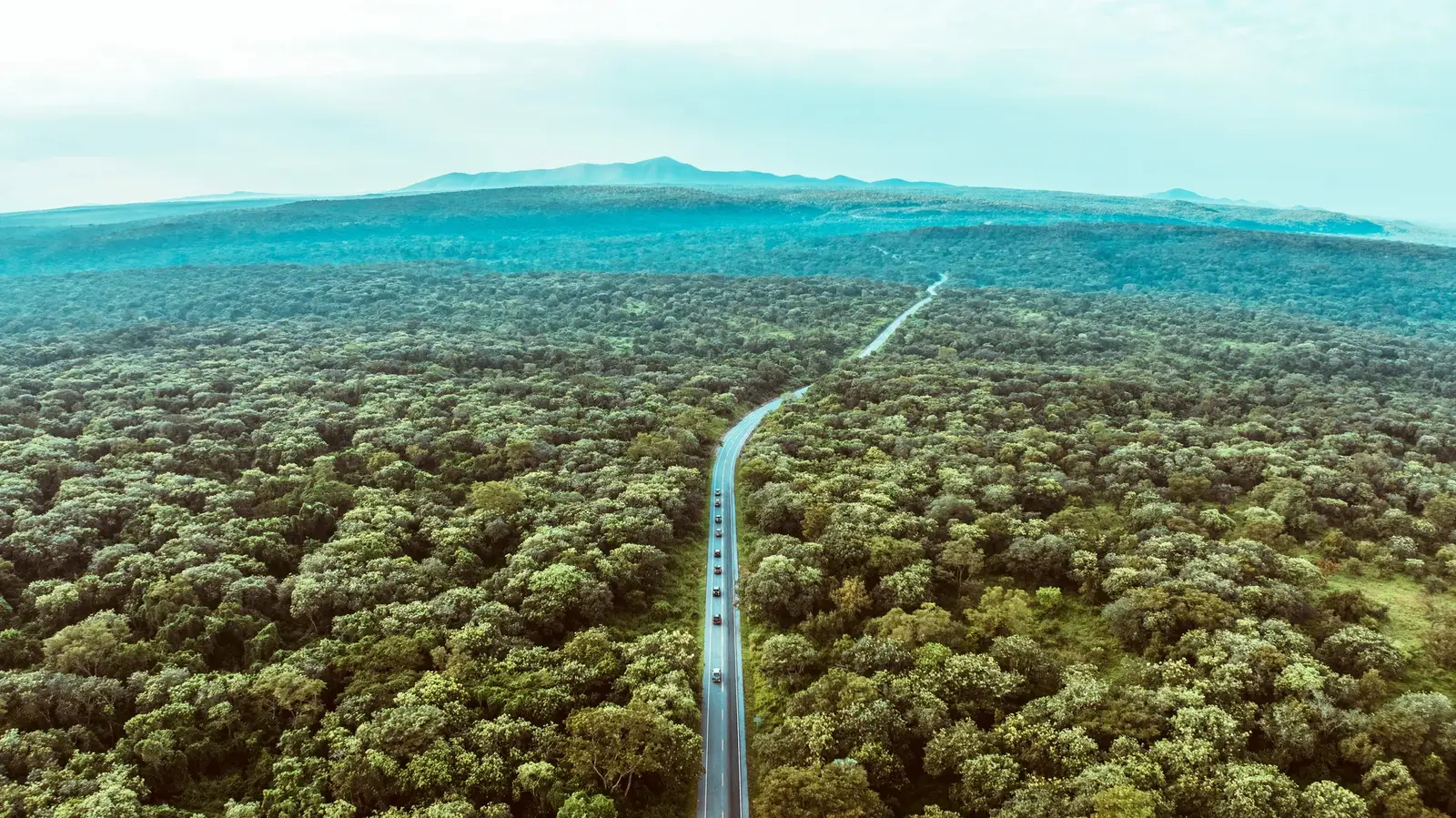
All five can be encountered on a single journey of 12 to 14 days. The route most journeys follow is Entebbe for shoebill, north to Ziwa for rhino tracking, west to Murchison Falls and onwards to Kibale for chimps, south through Queen Elizabeth for the Ishasha lions, and west to Bwindi for gorillas. We call this the Iconic Five journey. It is one of the most complete wildlife arcs available in Africa on a single passport.
Written by
Vincent Arihoruhanga
Founder, Bwindi House Gorilla Safaris.