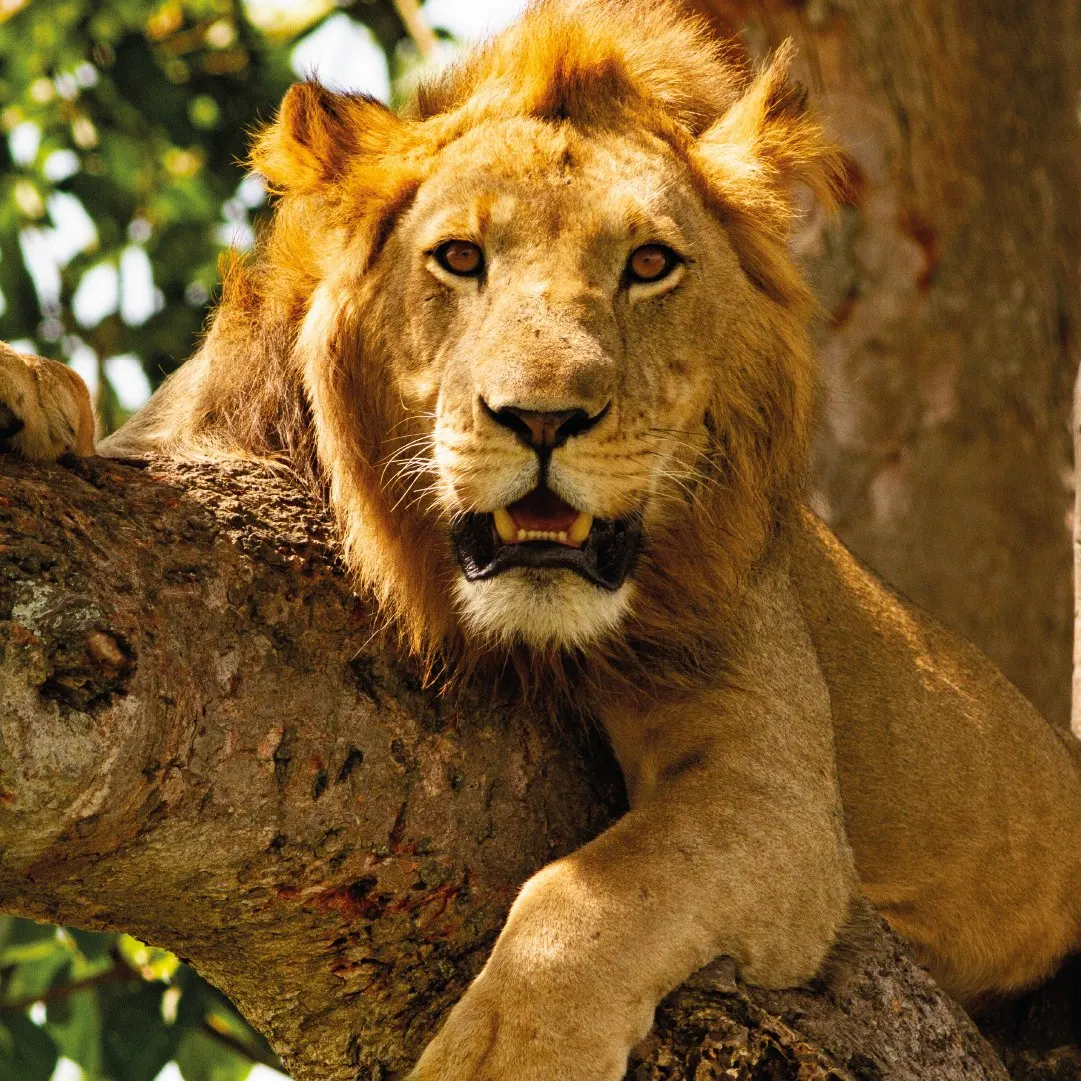
The notes I made this morning are not very scientific. I was sitting in a Land Cruiser beneath a large fig tree on the Ntungwe River, seven lions arranged across the branches above me, and the notes mostly say things like extraordinary and how. This is not, I think, a failure of professional detachment. I believe it is the correct response.
The phenomenon
Tree climbing lions are found in only two places in Africa. The Ishasha sector of Queen Elizabeth National Park in Uganda, and Lake Manyara National Park in Tanzania. Neither population climbs in the same way, at the same frequency, or with the same apparent motivation. The behaviour is, in the scientific literature, described as facultative. It occurs but is not obligate. Lions can climb trees. These lions do.
The theories
Four working hypotheses circulate in the field:
- Thermoregulation. The savannah floor temperature in dry season can exceed 40 degrees. Three metres above the ground, with air movement, it is considerably cooler.
- Parasite avoidance. Ground level tsetse flies and other biting insects are reduced in elevation. Lions in trees show different grooming behaviour to those on the ground.
- Vantage. The horizontal branches of the large fig trees along the Ntungwe provide sightlines across the plain. Whether lions actually use this for hunting planning is debated.
- Social learning. Cubs learn from adults. If adult lions in a pride climb trees, cubs will too. The behaviour may be self perpetuating regardless of its original utility.
The honest answer is that we do not know why the Ishasha lions climb trees. We may never know. The not knowing is, in some ways, the most interesting data point.
The encounter
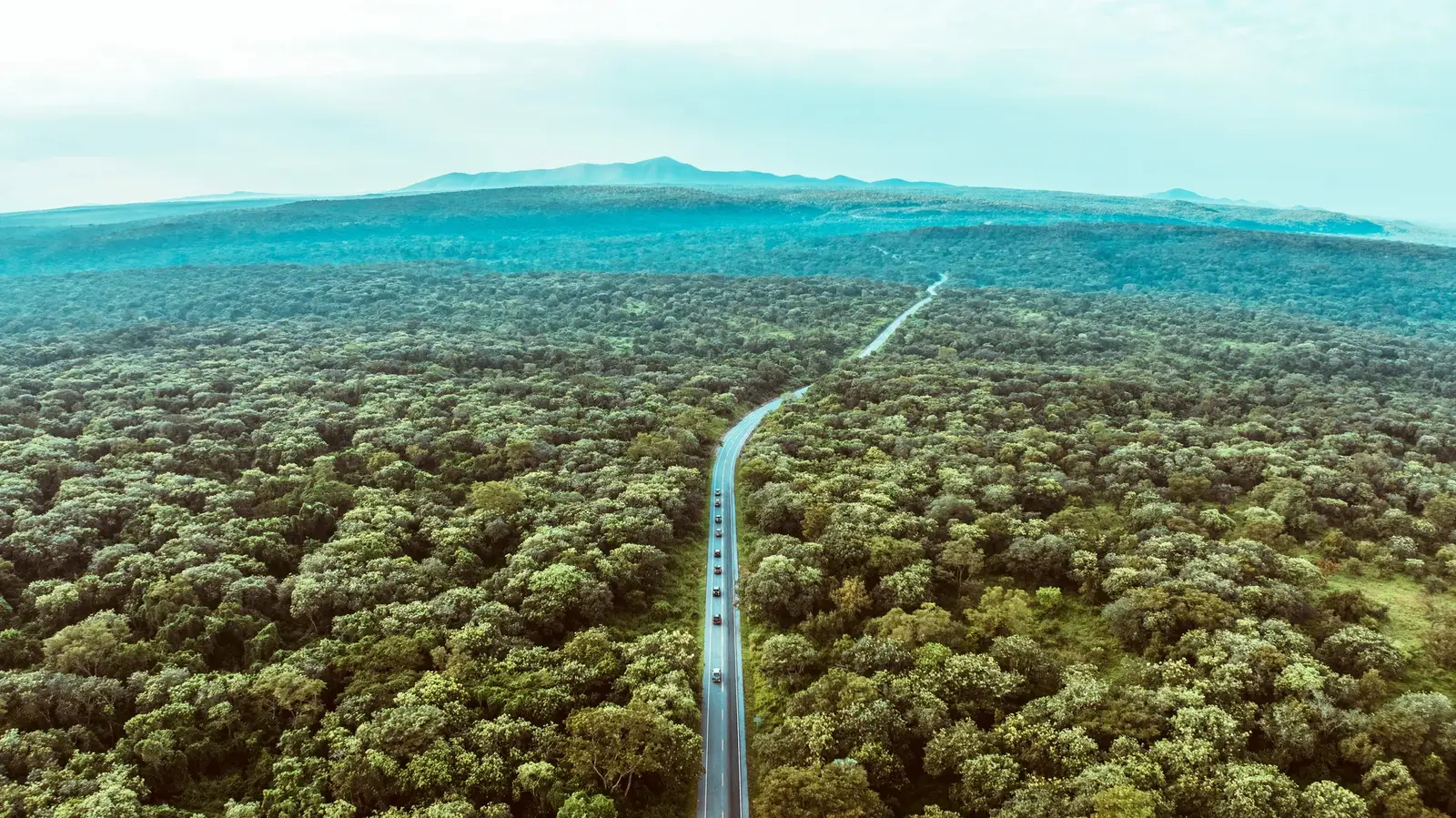
The Ishasha sector is reached by driving south from the main Queen Elizabeth park gate through open savannah for approximately two hours. The fig trees cluster along the Ntungwe River and its tributaries. Drive slowly. Look up, not out. The lions are often visible from a distance as a change in the silhouette of the tree canopy. Once you locate a lion in a tree, sit. Do not approach too closely. Watch. They will eventually descend, usually in the late afternoon as the temperature drops, and when they do, the visual of a large cat flowing down from a height that seems impossible is one of the genuinely unrepeatable sights in African wildlife.
Written by
Vincent Arihoruhanga
Founder, Bwindi House Gorilla Safaris.