Uganda vs Rwanda Gorilla Trekking
Rwanda is the polished short break. Uganda is the longer, layered story. We've planned both for years, and the honest comparison below is the one we wish more travellers had read before booking.
- Uganda trekking permit
- USD 800 per person
- Rwanda trekking permit
- USD 1,500 per person
- Uganda main gorilla park
- Bwindi Impenetrable National Park
- Rwanda main gorilla park
- Volcanoes National Park
- Habituation experience
- Uganda only, Rushaga sector
- Short-trip simplicity
- Rwanda
- Long, layered journeys
- Uganda
- Permit price spread
- USD 700 per person, per trek
The honest quick answer
Both Uganda and Rwanda offer extraordinary gorilla trekking. The right choice is not a question of which country is better, it is a question of which country fits the trip you actually want.
Rwanda is often the simpler and faster choice for a short, high-end fly-in trip built around a single gorilla day. Uganda is often the better choice for a longer, layered journey that combines gorillas with chimpanzees, savannah wildlife, and rare birding, and which rewards travellers willing to add a few more nights for a meaningfully deeper experience.
Quick comparison: Uganda vs Rwanda gorilla trekking
| Uganda | Rwanda | |
|---|---|---|
| Permit cost (foreign non-resident) | USD 800 | USD 1,500 |
| Main park | Bwindi Impenetrable National Park | Volcanoes National Park |
| Access | Entebbe by road, or fly to Kihihi or Kisoro | Kigali road transfer of around 2.5 to 3 hours |
| Trekking sectors | Buhoma, Rushaga, Nkuringo, Ruhija, Mgahinga | One park, multiple gorilla families |
| Lodge range | Comfortable to ultra-comfortable, sector-specific | Comfortable to globally famous ultra-luxury |
| Travel style | Layered private journeys with primate and wildlife add-ons | Compact, lodge-led fly-in style |
| Best for short trips | Workable with fly-in | Strong |
| Best for primates | Strong (Kibale chimpanzees, golden monkeys, habituation) | Limited beyond gorillas and golden monkeys |
| Best for value | Strong, especially over four nights | Limited |
| Best for broader safari | Strong (Queen Elizabeth, Murchison, Lake Mburo) | Limited |
| Habituation option | Yes, Rushaga only | No |
Permit cost comparison
The headline permit numbers are USD 800 in Uganda and USD 1,500 in Rwanda for a standard gorilla trekking permit, both for foreign non-residents. Uganda's habituation permit at USD 1,500 matches the Rwandan price but for a longer field session in Rushaga, which is a meaningfully different product.
On the permit alone, Uganda saves USD 700 per person, per trek. On a couple doing one trek each, that is USD 1,400 redirected to a better lodge, a longer route, or an extra night. The cost difference compounds when families or groups trek together.
Access and logistics
Rwanda is geographically advantageous. Kigali International Airport is well connected, and Volcanoes National Park sits around two and a half to three hours by road. That single fact accounts for much of Rwanda's appeal for short trips.
Uganda is larger and more spread out. Entebbe to Bwindi by road is a full one to two days each way, normally broken with an overnight in Lake Mburo or Kibale. Fly-in to Kihihi or Kisoro reduces the transfer to about one hour in the air. For a three-night fly-in trip Uganda is workable. For a four to seven-night journey, road travel becomes a feature of the trip, not a problem.
Experience difference in the forest
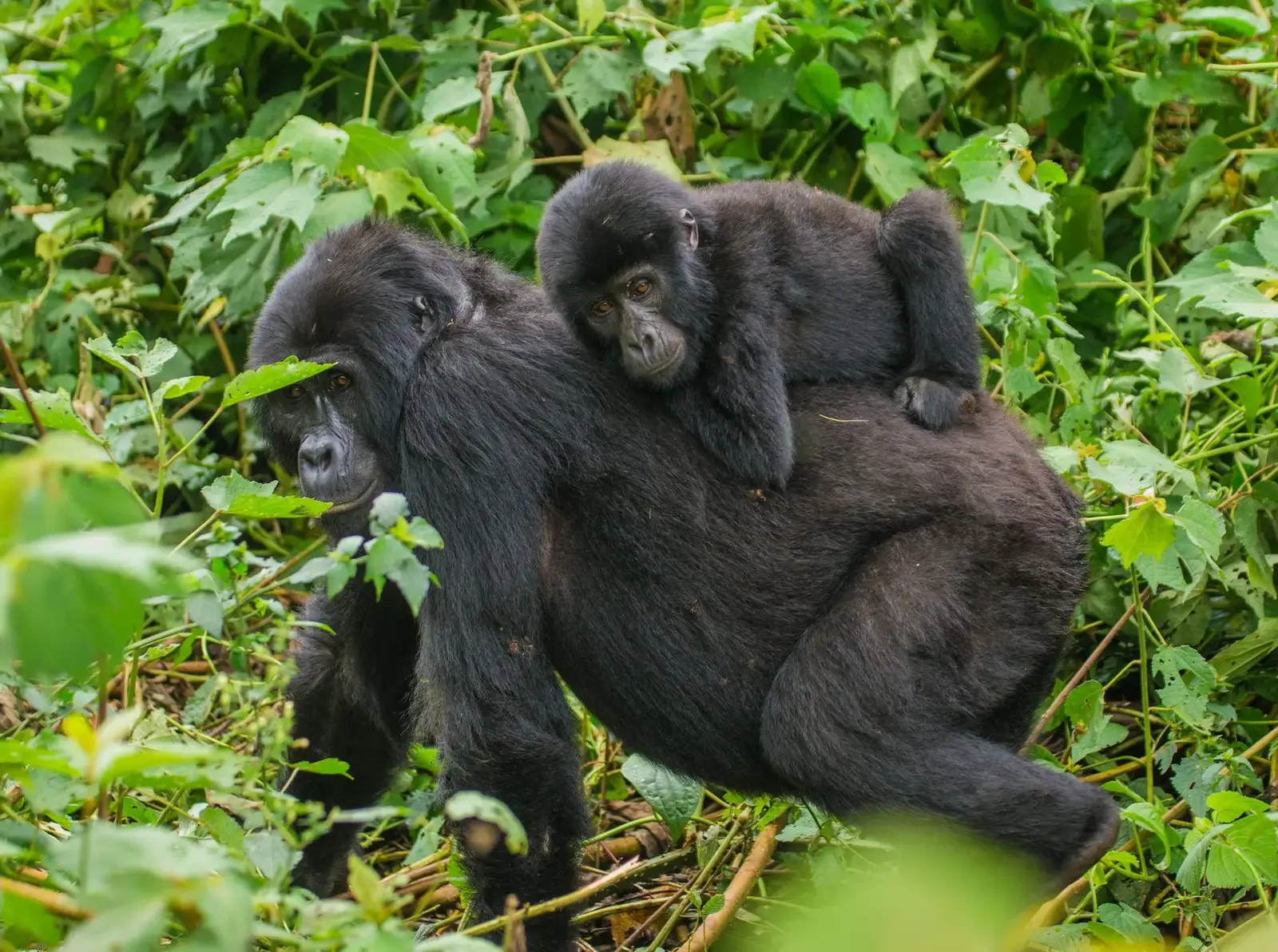
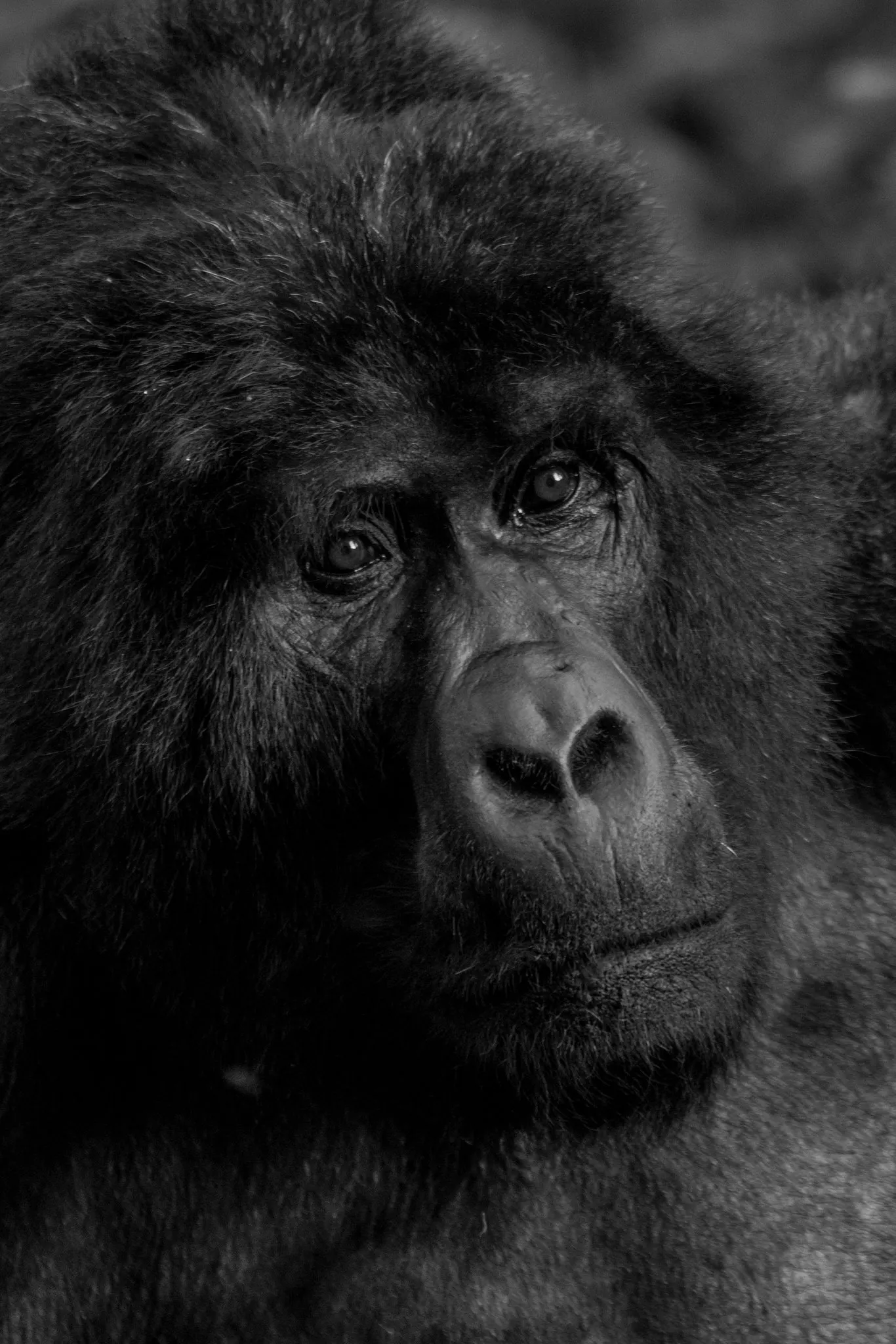
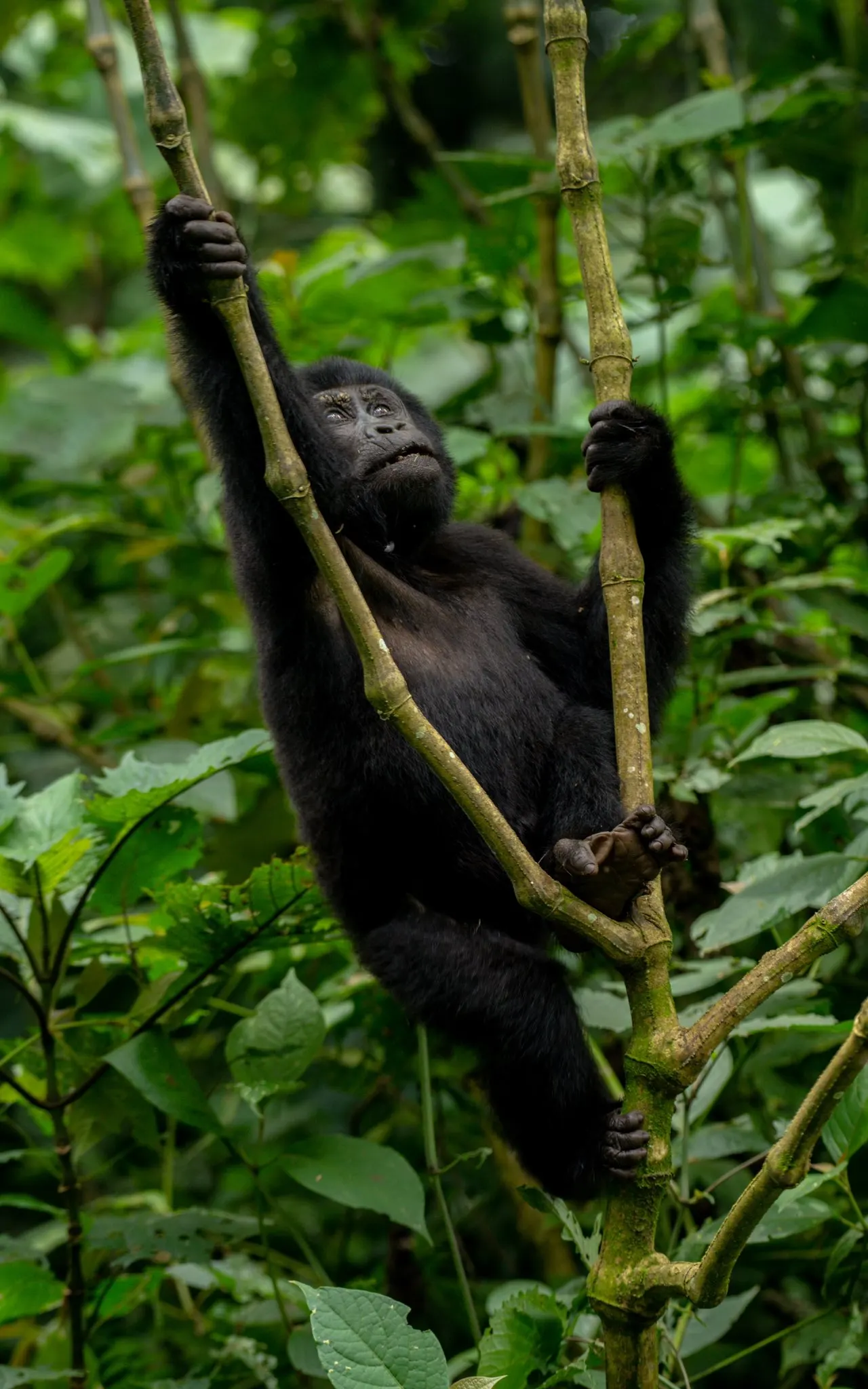
Rwanda's Volcanoes National Park is a bamboo and hagenia-dominated montane forest at higher altitude. Sightlines tend to be more open. Bwindi is an older, denser, multi-canopy forest at lower altitude, more humid, more atmospheric, and with thicker undergrowth. The encounter itself, an hour of regulated time with a habituated family, is similar in spirit and very different in setting.
Uganda's biggest experiential advantage is the habituation experience in Rushaga, which Rwanda does not offer. That alone is the deciding factor for many photographers and serious wildlife travellers.
Total cost difference, not just permits
Total trip cost depends on lodge, length, transport and group size, and Uganda generally delivers more journey for the same spend over four nights or more. A short two to three-night fly-in in Rwanda can sit in a similar bracket to a four to five-night private journey in Uganda, with the Ugandan trip offering more days, more variety, and a longer experience overall.
For travellers focused on a single gorilla day at the lowest possible lodge spend, Rwanda's higher permit is partly offset by shorter ground time. For travellers building a real journey, Uganda's economics open up the route.
Lodge comparison
Rwanda has a small number of internationally famous ultra-luxury lodges adjacent to Volcanoes National Park, including names that anchor the global luxury safari conversation. The product is concentrated, polished, and convenient.
Uganda has strong forest lodges in each sector of Bwindi. They are character-led rather than uniform. Sector planning matters more in Uganda because the lodge needs to be in the right sector for the trek. Our defaults are Trackers Safari Lodge in Buhoma for standard trekking and Gorilla Leisure Lodge in Rushaga for habituation, both selected for sector fit as much as for comfort.
Best for first-time gorilla travellers
Either country works for a first-time gorilla traveller. Rwanda's simplicity suits a tight schedule. Uganda's range suits travellers who want the gorilla experience to anchor a broader Africa trip. If the gorilla day is the only goal and the budget allows, Rwanda. If the gorilla day is the start of a wider story, Uganda.
Best for luxury travellers
For ultra-high-end simplicity with the shortest path from airport to lodge to forest, Rwanda has the edge. For a private, deeper, more layered luxury journey, with finer paced routing through several distinct landscapes, Uganda has more to offer. Both can be done with excellence. They are not the same product.
Best for photographers
Uganda often wins for serious photographers because of habituation. A longer field session in Rushaga gives you the time to wait for behaviour, light, and composition. Standard trekking in either country gives strong photography in a one-hour window, with Rwanda's more open canopy offering slightly easier light on some treks and Bwindi offering more atmosphere.
Best for families
The minimum age for gorilla trekking is fifteen in both Uganda and Rwanda. Family planning therefore tends to look similar: parents and eligible teenagers join the trek, younger children join alternative activities at the lodge. Uganda's wider route, including Kibale and Lake Bunyonyi, supports families looking for a richer multi-day plan beyond the gorilla day.
Conservation-minded travellers
Both UWA and the Rwanda Development Board reinvest permit revenue into gorilla protection, park infrastructure, and community programmes. The conservation argument is not a contest between the two countries. The honest framing is that both contribute. Uganda's wider sector spread also allows travellers to support a broader set of community partnerships through a longer route, including forest-edge community visits and conservation lodges.
Both countries protect the same species. The honest difference is permit price, drive time, and the texture of the forest. The right answer is the one that fits your dates, budget, and pace.
The Bwindi House Gorilla Safaris recommendation
Choose Uganda if you want the gorilla encounter to become part of a larger story: Bwindi, Rushaga, Kibale, Mgahinga, the shoebill at Mabamba, the rhinos at Ziwa, and a private route stitched together by your guide.
Choose Rwanda if you have four to five nights, want the simplest fly-in possible, and the gorilla day is the centrepiece. Choose both if you have ten nights and want the comparison. We compose all three.
Compare your dates, budget and travel style with a curator
Send us your travel window, days available and rough budget. We will come back with a Uganda plan, a Rwanda plan, or a combined route, with honest cost differences side by side.