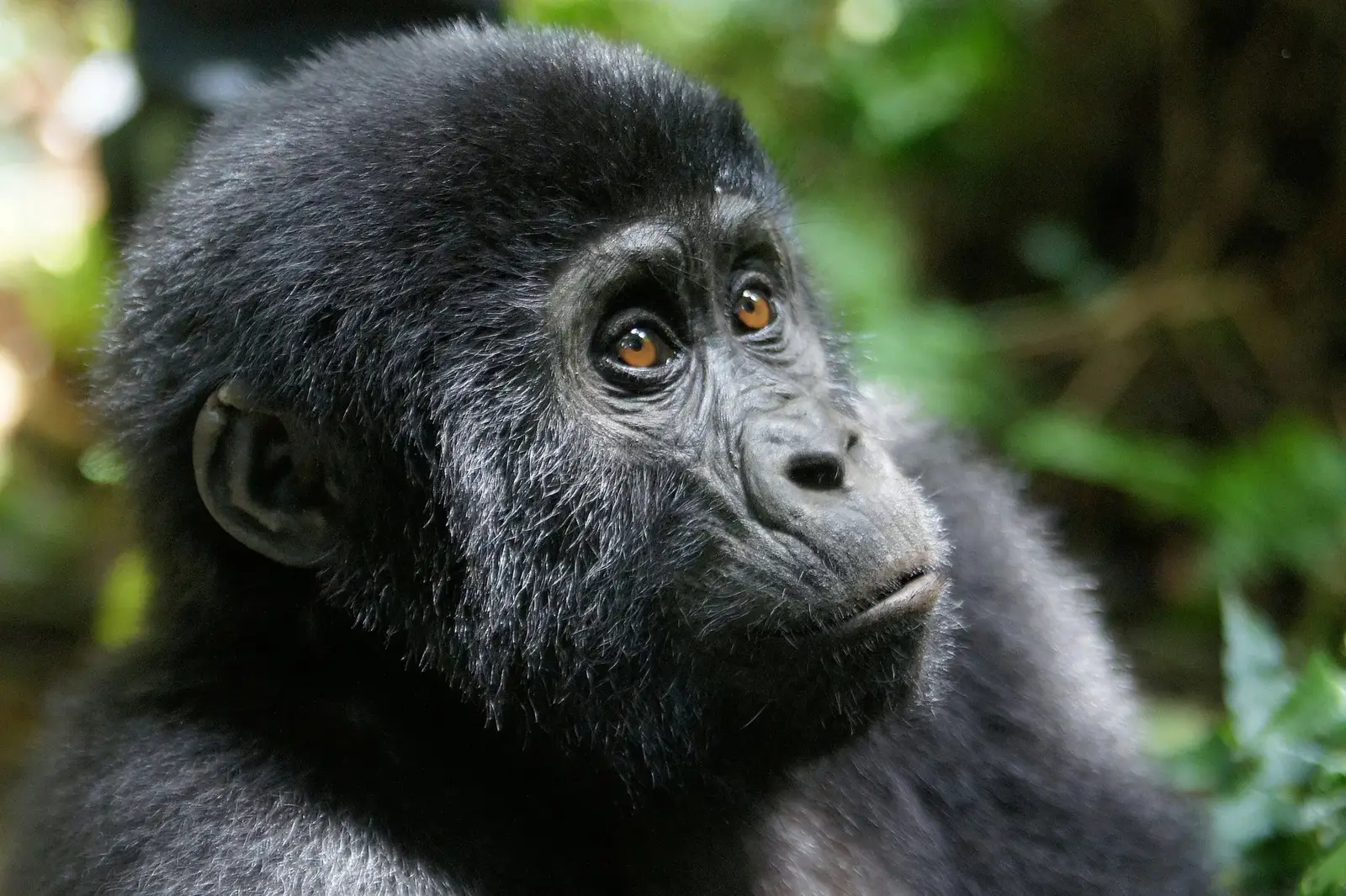
Gorilla Trekking vs Gorilla Habituation in Uganda
One precious hour, or four slow ones with researchers. Two genuinely different ways to meet a mountain gorilla family. Which is right for you depends on time, fitness, budget and what you came for.
- Trekking field time
- Up to one hour with the family
- Habituation field time
- Longer field session, subject to field rules
- Trekking permit
- USD 800 per person, foreign non-resident
- Habituation permit
- USD 1,500 per person, foreign non-resident, Rushaga only
- Trekking group size
- Up to eight guests
- Habituation group size
- Up to four guests
- Trekking nights recommended
- Three minimum
- Habituation nights recommended
- Four to five
Quick comparison: trekking vs habituation
| Trekking | Habituation | |
|---|---|---|
| Time with gorillas | Up to one hour | Longer field session, subject to rules |
| Permit cost (foreign non-resident) | USD 800 | USD 1,500 |
| Best sector | Buhoma, Nkuringo, Ruhija, Mgahinga | Rushaga only |
| Group size | Up to eight guests | Up to four guests |
| Fitness level | Moderate, varies by sector | High, expect a full forest day |
| Best for | First-time travellers, couples, families with eligible teens | Photographers, repeat visitors, serious wildlife guests |
| Nights recommended | Three minimum | Four to five minimum |
| Photography suitability | Strong, one-hour ceiling | Stronger, longer light and behaviour window |
| Availability | Wider, but peak weeks fill early | Tight, plan twelve months ahead |
| Price level | Premium | Premium plus |
What gorilla trekking actually is
A standard gorilla trek in Uganda is a guided walk into Bwindi Impenetrable Forest or Mgahinga Gorilla National Park to spend up to one hour with a fully habituated mountain gorilla family. The family has been gradually accustomed to human presence over years, so the encounter is calm and controlled, with the ranger team setting the pace and managing the distance.
Trekking distance and difficulty vary by family and by morning. Some treks return in three hours, others run to seven or eight. The hour with the gorillas, once contact is made, is the same for every family.
What gorilla habituation actually is
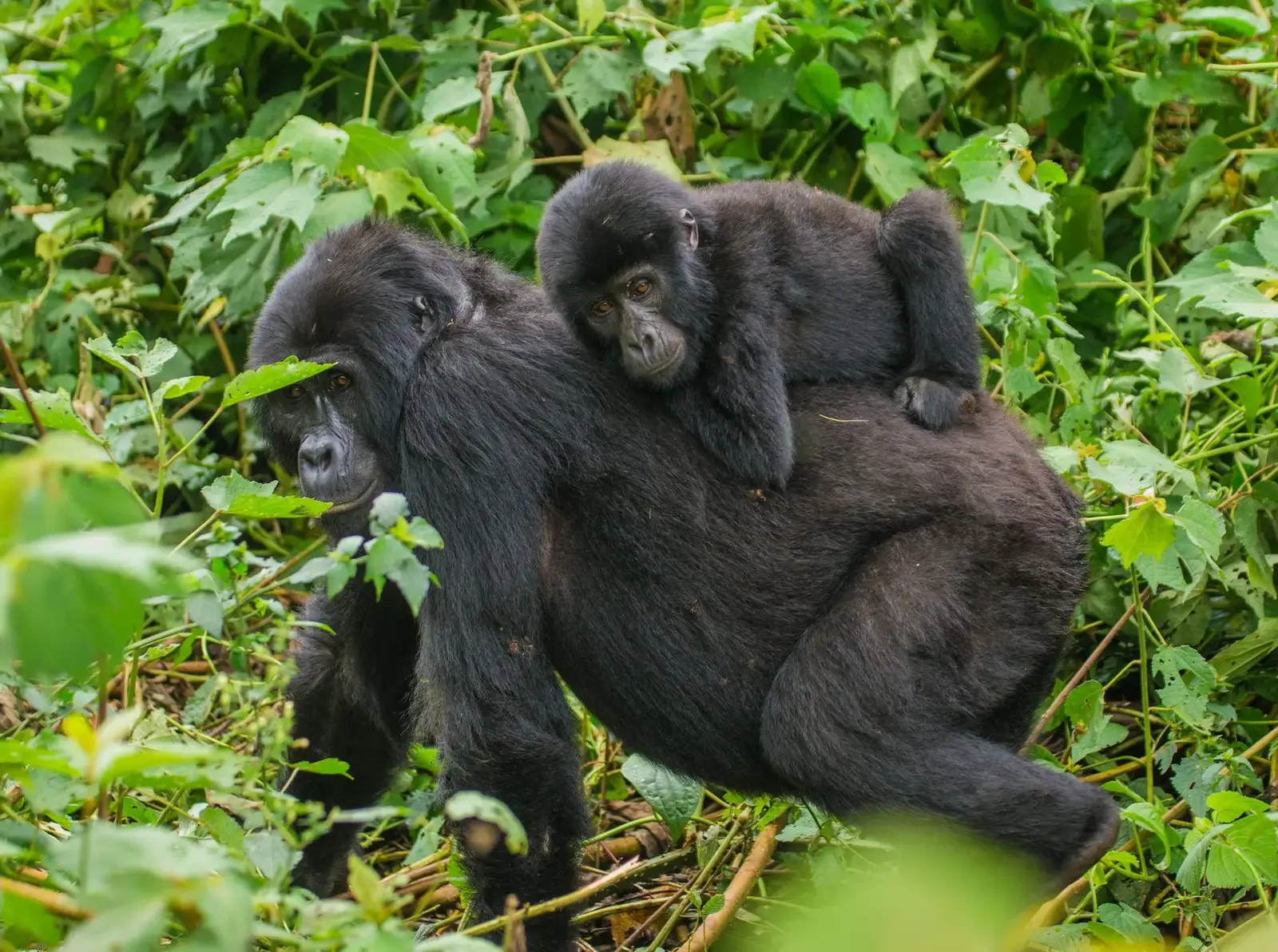
The gorilla habituation experience is a longer, research-led field session with a gorilla family that is still in the habituation process. The family is not yet fully comfortable with regular human presence, so the encounter is quieter, the group is smaller, and the field team includes researchers as well as rangers. You spend longer in the family's space, not because you have more time with them visible, but because the field rhythm is different.
Habituation should not be sold as a longer photo opportunity. It is a different category of forest experience, with different expectations and different responsibilities for the visitor.
Time with the gorillas, honestly described
Trekking is capped at one hour once the ranger team confirms contact with the family. Habituation is not capped to one hour, and field sessions can extend, but the actual viewing time with gorillas visible is governed by what the family does. They feed, they move, they rest, and sometimes they disappear into thick vegetation. The honest framing of habituation is "longer field time" not "four guaranteed hours of photography."
Permit cost difference
The trekking permit is USD 800 per person, per day for foreign non-residents. The habituation permit is USD 1,500 per person, per day, for the same category. The difference of USD 700 per person is the price of a different product, not an upgraded version of the same one.
Where each experience happens
Trekking is offered across multiple sectors: Buhoma in the north, Nkuringo and Rushaga in the south, Ruhija in the east, and Mgahinga in Mgahinga Gorilla National Park subject to family movement. Habituation is offered only in Rushaga.
The "only in Rushaga" point is the single most important fact for any traveller considering habituation. Lodge selection, road planning and pacing all follow from it. See Rushaga trekking guide for the practical detail.
Fitness and difficulty in the forest
Standard trekking ranges from moderate to challenging depending on the family, sector and weather. Reasonable hill-walking fitness and broken-in waterproof boots are usually enough. Habituation requires more. Plan for a full day in the forest, on terrain that may include steep, muddy, off-trail sections, with high humidity at altitude.
Neither product is a wilderness expedition. Both are demanding outings that reward proper preparation. A porter is recommended on every trek and is essentially required for habituation.
Photography comparison
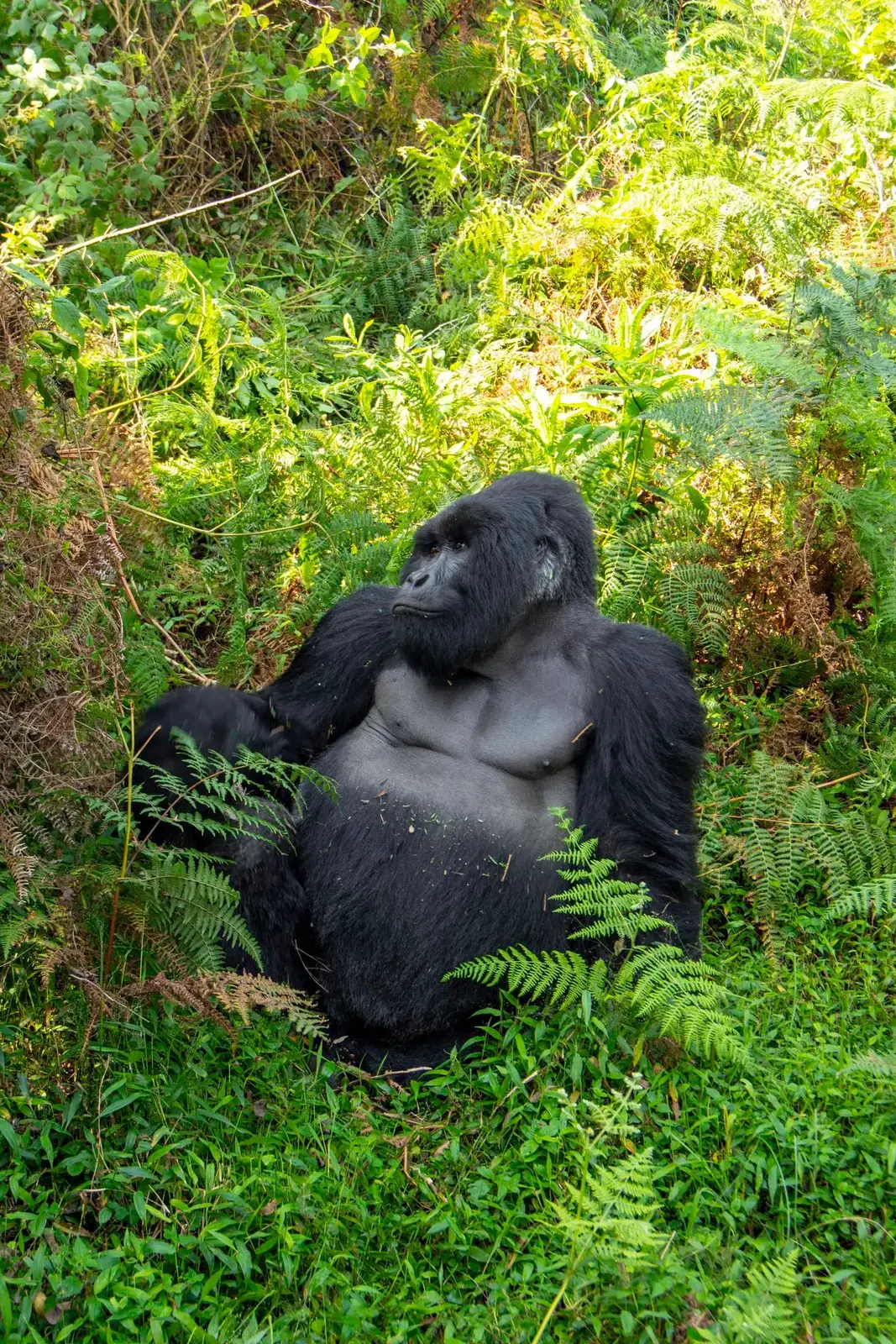
For pure photography, habituation usually wins because the time pressure is lower and the group is smaller. You can wait for behaviour, you can wait for light, and you can move with the family for longer. The trade-off is that the family may behave less predictably than a fully habituated one. Standard trekking offers excellent photography too, in a more compressed window with a more settled family.
Neither experience guarantees portfolio images. Both reward photographers who arrive with realistic settings, low expectations, and respect for the brief from the ranger.
Who should choose gorilla trekking
Standard trekking is the right product for:
- First-time travellers to Uganda or to gorilla trekking.
- Couples and honeymooners with limited time.
- Families travelling with eligible teenagers (minimum age fifteen).
- Travellers who want the classic, profoundly moving one-hour encounter.
- Travellers whose interest is broader than gorillas alone and want to keep time for primates, wildlife or culture.
Who should choose gorilla habituation
Habituation suits:
- Returning gorilla travellers who want a different kind of encounter.
- Photographers willing to invest the time and the fitness.
- Serious wildlife travellers comfortable with field uncertainty.
- Conservation-minded guests interested in the habituation process itself.
- Travellers with at least four to five nights to compose the trip around Rushaga.
Should you do both on one trip?
Sometimes, yes. A combined trip with one habituation day in Rushaga and one trekking day in Buhoma, Nkuringo or Mgahinga is one of the deepest gorilla itineraries available in East Africa. It requires two permits, four to five nights minimum, and honest fitness. It also requires sector-aware routing so you are not driving across Bwindi the morning of a trek.
For most first-time travellers we recommend one or the other, not both. The combined trip is a deliberate choice, often by returning guests.
How many nights you actually need
- Trekking only: three nights minimum. Two pre-trek to land and settle, one trek day, one cushion night before flying out.
- Habituation only: four nights minimum, ideally five days and four nights. Rushaga deserves time at both ends.
- Both: five to seven nights, with a sensible buffer between the two field days.
The Bwindi House Gorilla Safaris recommendation
For the classic experience, our recommendation is The Bwindi Gorilla Encounter based at Trackers Safari Lodge in Buhoma. For the deeper, longer field session, our recommendation is Gorilla Habituation in Rushaga, based at Gorilla Leisure Lodge. Both are private journeys, both are permit-led, and both are priced honestly.
Not sure which is right for you? Speak to a Bwindi specialist.
Tell us your fitness, your photography interest, your travel window, and your fallback dates. We will recommend trekking, habituation or a combination, and explain why before you commit to anything.